Why Are My Interior Doors Suddenly Sticking? Common Causes Aurora Homeowners Overlook
Interior doors are designed to open and close smoothly, creating comfort, privacy, and convenience throughout a home. When doors suddenly begin sticking, dragging across the floor, or refusing to latch properly, many homeowners assume the issue is minor or temporary. In reality, sticking interior doors often point to underlying problems involving moisture, structural movement, seasonal weather changes, or worn hardware. In areas where temperatures fluctuate throughout the year, these issues can become especially noticeable as homes expand and contract with changing environmental conditions. What begins as a slight rubbing sound or resistance near the frame can quickly develop into visible damage, cracked trim, warped wood, or alignment problems that affect multiple doors throughout the property.
For homeowners in Aurora, understanding why interior doors stick is important because ignoring the problem may allow larger structural or moisture-related concerns to worsen over time. Interior doors respond to humidity, settling foundations, temperature swings, and daily wear in ways many people overlook until functionality becomes frustrating. Proper diagnosis helps prevent unnecessary repairs while protecting door frames, flooring, hinges, and surrounding walls. Whether the issue affects one room or several areas of the home, identifying the root cause early helps restore smooth operation and maintain long-term interior performance without creating additional household complications later.
Seasonal Humidity Changes and Wood Expansion
Why Moisture Impacts Interior Doors
Wood naturally absorbs moisture from the surrounding air. During periods of high humidity or rapid seasonal weather shifts, wooden interior doors may swell slightly as moisture content increases. Even small changes in expansion can create enough friction for a door to stick against the frame or scrape across flooring surfaces. Many homeowners notice these problems during spring storms, humid summer conditions, or after heavy snowfall transitions.
Homes with inconsistent indoor humidity often experience recurring door issues because moisture levels fluctuate throughout the year. Bathrooms, laundry rooms, kitchens, and basements are particularly vulnerable since steam and trapped humidity collect in enclosed areas. Without proper ventilation, interior doors near these spaces may expand repeatedly over time.
Signs Moisture Is the Main Cause
Humidity-related sticking often appears gradually and may affect doors differently depending on their location within the house. Common indicators include:
- Doors sticking only during certain seasons
- Tight movement near the top or side frame
- Swollen wood edges
- Paint cracking near corners
- Increased resistance after showers or rainy weather
When homeowners force swollen doors open repeatedly, hinges loosen and wood edges become damaged. This can lead to permanent alignment issues even after humidity levels return to normal.
Preventing Humidity-Related Door Problems
Maintaining balanced indoor humidity helps reduce seasonal expansion. Proper ventilation systems, dehumidifiers, attic airflow improvements, and HVAC maintenance all help stabilize interior conditions. Sealing unfinished wood edges and repainting worn surfaces can also reduce moisture absorption.
Foundation Settling and Structural Movement
How Homes Naturally Shift Over Time
All homes settle to some degree as soil compresses beneath the structure. In regions where freeze-thaw cycles, shifting soil, and moisture variations occur regularly, gradual movement can affect walls, floors, and door openings. Interior doors are often among the first visible indicators of structural movement because even minor frame shifts impact alignment.
When a doorway becomes slightly uneven, doors may drag along the floor, strike the upper frame corner, or refuse to latch properly. These symptoms sometimes appear slowly over months, making the underlying issue harder to recognize immediately.
Warning Signs Beyond the Door Itself
Sticking doors caused by structural movement often appear alongside other household symptoms. Homeowners should watch for:
- Cracks near door frames or ceilings
- Uneven flooring
- Gaps between trim and walls
- Doors swinging open independently
- Difficulty locking interior doors
When several doors begin sticking simultaneously, foundation settling may be contributing to the issue. Ignoring these warning signs can allow shifting to continue until repairs become far more extensive.
Why Professional Assessment Matters
Many homeowners attempt quick fixes such as sanding door edges or tightening hinges without addressing structural movement. While temporary adjustments may improve operation briefly, the sticking often returns because the frame itself remains misaligned. Evaluating wall movement, floor leveling, and frame positioning helps determine whether the problem originates from settlement rather than the door alone.
Loose Hinges and Hardware Wear
Daily Use Creates Gradual Stress
Interior doors are opened and closed thousands of times over their lifespan. Constant movement places stress on hinges, screws, latch plates, and mounting points. Over time, hardware may loosen gradually, causing the door to sag slightly within the frame. Even minimal sagging creates uneven pressure that leads to sticking, rubbing, or poor latch alignment.
High-traffic areas such as bedrooms, bathrooms, offices, and laundry rooms typically experience the fastest hardware wear because of repeated daily use.
Common Hardware Problems Homeowners Overlook
Many sticking doors are caused by relatively simple mechanical issues that become worse when left unresolved. Common problems include:
- Loose hinge screws
- Bent hinge plates
- Worn hinge pins
- Misaligned strike plates
- Stripped screw holes
A sagging hinge often causes the upper corner of the door to rub tightly against the frame while creating wider gaps elsewhere around the opening.
The Importance of Proper Adjustments
Hardware adjustments require precision because improper repositioning can create additional alignment problems. Replacing screws with longer fasteners, reinforcing mounting areas, or adjusting hinge spacing may restore smooth operation without requiring full door replacement. In some cases, older hinges may no longer support the door properly due to metal fatigue or previous repair attempts.
Flooring Changes and Door Clearance Problems
Renovations Often Affect Door Operation
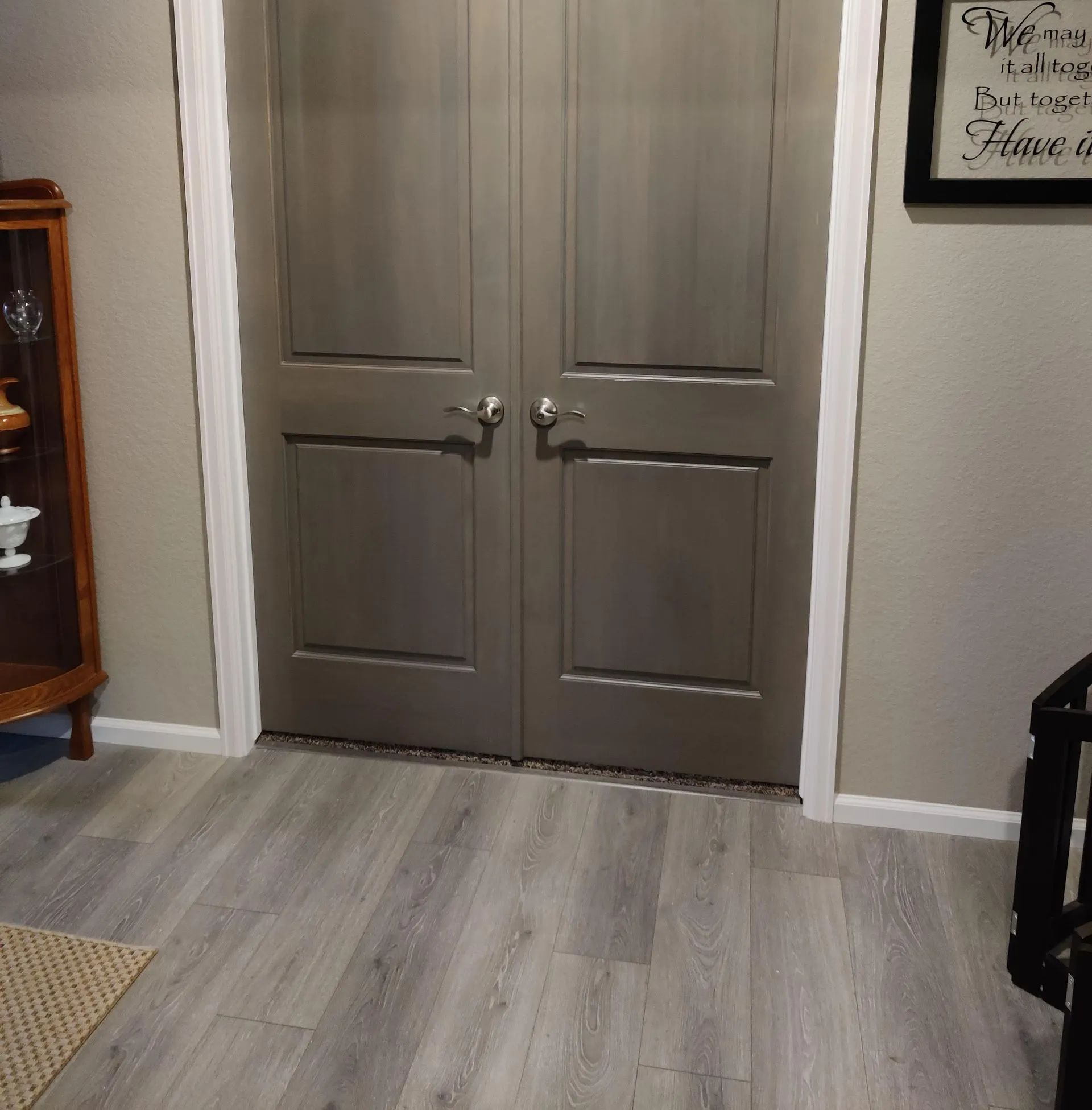
One commonly overlooked cause of sticking interior doors involves flooring changes made after the original door installation. New hardwood, laminate, tile, or carpet installations can reduce floor clearance beneath the door, causing scraping or resistance during movement.
Even slight flooring height increases may interfere with proper operation if the original door clearance was already limited. Homeowners sometimes notice problems immediately after remodeling projects or flooring upgrades throughout the home.
Expansion of Flooring Materials
Certain flooring materials expand and contract with seasonal moisture changes. Hardwood flooring, for example, may rise slightly during humid conditions, reducing the space beneath the door. Carpet padding can also compress unevenly over time, changing how the door swings across the surface.
This issue becomes more noticeable in hallways and shared living spaces where multiple flooring transitions meet beneath the doorway.
Preventing Long-Term Damage
When doors scrape repeatedly against flooring surfaces, both materials can become damaged. Paint wears away along the bottom edge of the door while flooring surfaces develop scratches, dents, or finish damage. Addressing clearance issues early helps preserve both the door system and surrounding flooring materials.
Poor Installation and Frame Misalignment
Installation Accuracy Affects Long-Term Performance
Interior doors rely on precise installation to function properly over time. Even slight frame misalignment during installation can create ongoing stress that eventually causes sticking. While problems may not appear immediately, seasonal expansion, structural settling, and repeated use can worsen small installation errors over the years.
Frames installed out of square place uneven pressure on the door slab, causing friction along certain edges while leaving larger gaps elsewhere.
Common Installation Mistakes
Several installation-related issues contribute to sticking doors, including:
- Uneven frame positioning
- Improper shimming
- Incorrect hinge spacing
- Misaligned latch hardware
- Inadequate support behind hinges
Poor installation sometimes becomes noticeable only after weather changes expose weaknesses in the original setup.
Why DIY Repairs Sometimes Fail
Homeowners often attempt to plane door edges, replace hinges, or force latch alignment without identifying the true cause of the problem. These temporary fixes may relieve symptoms briefly but fail to correct the underlying frame issue. Professional evaluation helps determine whether the door, frame, hinges, or surrounding structure requires adjustment.
Professional Door Alignment Solutions Backed By Experience
Interior doors rarely begin sticking without an underlying reason. Moisture exposure, seasonal humidity, structural settling, hardware wear, flooring changes, and installation problems all contribute to alignment issues that homeowners frequently overlook. While a sticking door may seem like a small inconvenience at first, the problem often signals larger concerns involving home movement, ventilation, or deteriorating components. Addressing the issue early helps prevent damage to frames, hinges, flooring, and surrounding walls while restoring smooth functionality throughout the home.
Understanding the true cause of sticking interior doors allows homeowners to avoid temporary fixes that fail to solve the root problem. Careful inspection, proper maintenance, and timely adjustments protect both the appearance and long-term performance of interior door systems. When multiple doors begin sticking or symptoms continue worsening, professional evaluation becomes important for identifying hidden structural or environmental factors before more expensive repairs develop later.
With over 15
years of experience serving homeowners throughout Aurora, CO, Ortiz Quality Doors
provides trusted solutions for interior door alignment, repair, replacement, and installation concerns. We understand how seasonal climate conditions, structural movement, and hardware wear affect residential door systems across local properties. Our approach focuses on identifying the actual source of the problem instead of masking symptoms with temporary repairs. From
correcting sticking interior doors
to improving frame alignment and restoring smooth operation, we deliver dependable workmanship backed by industry knowledge and attention to detail. Homeowners rely on us for accurate assessments, durable repairs, and professional guidance that helps protect long-term home performance. Whether a single bedroom door has become difficult to close or multiple interior doors show signs of shifting, we provide practical solutions designed to improve comfort, functionality, and reliability throughout the home. At Ortiz Quality Doors, we remain committed to helping Aurora homeowners maintain strong, properly functioning interior door systems built for lasting performance.